
5 Types of Bulldozer Blades and Tracks. Which One Fits Your Job?
☰ Table of Contents
- Blade 1: Straight Blade (S-Blade)
- Blade 2: Universal Blade (U-Blade)
- Blade 3: Semi-Universal Blade (SU-Blade)
- Blade 4: Angle Blade (A-Blade)
- Blade 5: Cushion Blade
- Track 1: Standard Track
- Track 2: Low Ground Pressure (LGP)
- Track 3: Extreme Low Ground Pressure (XLGP)
- Track 4: Double Grouser Track
- Track 5: Smooth Track
- Matching Blades & Tracks to Jobs
- Common Costly Mistakes
- Cost Comparisons
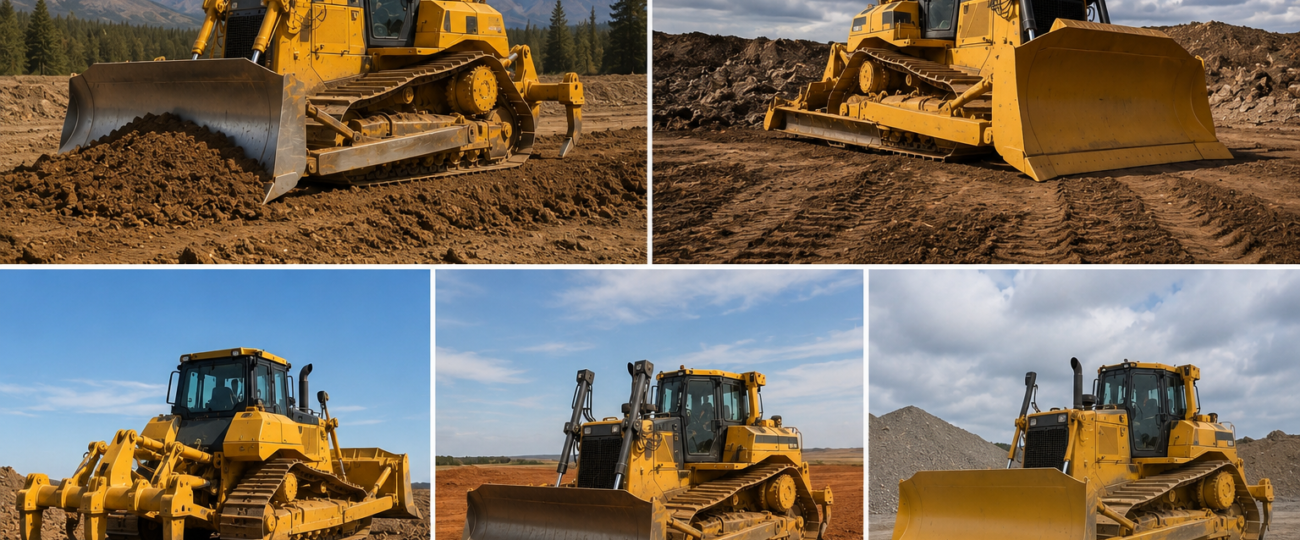
You walk onto a job site. You see a bulldozer. You see its blade. You see its tracks. Every dozer looks similar. But every dozer works differently based on the types of bulldozer attachments installed.
The specific types of bulldozer blades and tracks determine the machine’s true purpose. A wrong blade slows your work. A wrong track stops your work. You need the right combination. While diagnosing a bad combo can be tricky, fixing other issues isn’t always hard—for instance, if you have an excavator idle speed too high, turn 1 screw to fix it. Here, we tackle attachment selection.
This post covers 5 types of bulldozer blades and 5 types of bulldozer tracks. You learn which one fits your job. You save time. You save money. You finish work faster. Let us start with blades first.
The S blade is the most common blade among all types of bulldozer setups. It has no side wings. It sits straight across the dozer. It is short and low.
- Purpose: Fine grading. Backfilling. Spreading material. Leveling uneven ground. The S blade works best for precise work.
- Advantages: S blade gives you excellent visibility. You see the blade tip clearly. You control depth accurately. You spread material evenly.
- Disadvantages: S blade does not carry large loads. Material spills off the sides. You cannot push huge volumes. The S blade is not for heavy bulk pushing.
- Best jobs: Road grading. Site leveling. Backfilling trenches. Spreading gravel or sand.
One operator used an S blade on a housing project. He graded 50 house pads. Each pad was level within half an inch. His supervisor approved every pad. The S blade made his work perfect. The S blade is the first among the types of bulldozer blades you should know.
The U blade has large side wings. The wings curve forward. The blade is tall and deep. It looks like a large scoop.
- Purpose: Pushing large material volumes. Coal. Sand. Gravel. Debris. The U blade carries more material than any other blade in these types of bulldozer applications.
- Advantages: U blade holds material inside the wings. Material does not spill. You push 30 to 40 percent more per pass. You complete work faster.
- Disadvantages: U blade gives poor visibility. Wings block your view. You cannot grade precisely. You cannot spread material evenly.
- Best jobs: Stockpile pushing. Mine site reclamation. Land clearing. Large earthmoving projects.
An operator in a coal mine used a U blade. He moved 2000 tons of coal per shift. His S blade pushed only 1400 tons. The U blade increased his output by 40 percent. He never used an S blade for bulk work again. The U blade is a critical entry when considering types of bulldozer blades for heavy pushing.
The SU blade combines S and U features. It has smaller side wings than the U blade. It has more curve than the S blade. It sits in the middle of the two designs.
- Purpose: General earthmoving. Pushing moderate volumes. Grading with some load retention. The SU blade is the most versatile blade out of all types of bulldozer attachments.
- Advantages: SU blade balances load and visibility. You see the blade tip. You hold more material than an S blade. You grade better than a U blade.
- Disadvantages: SU blade does not excel at any single task. It pushes less than a U blade. It grades less than an S blade. It is a compromise.
- Best jobs: General construction. Road building. Site preparation. Farm work.
A contractor owned one dozer. He used an SU blade for every job. He graded roads. He pushed stockpiles. He cleared land. The SU blade handled everything. He saved money on blade changes. The SU blade is the most popular choice among types of bulldozer blades for mixed work.
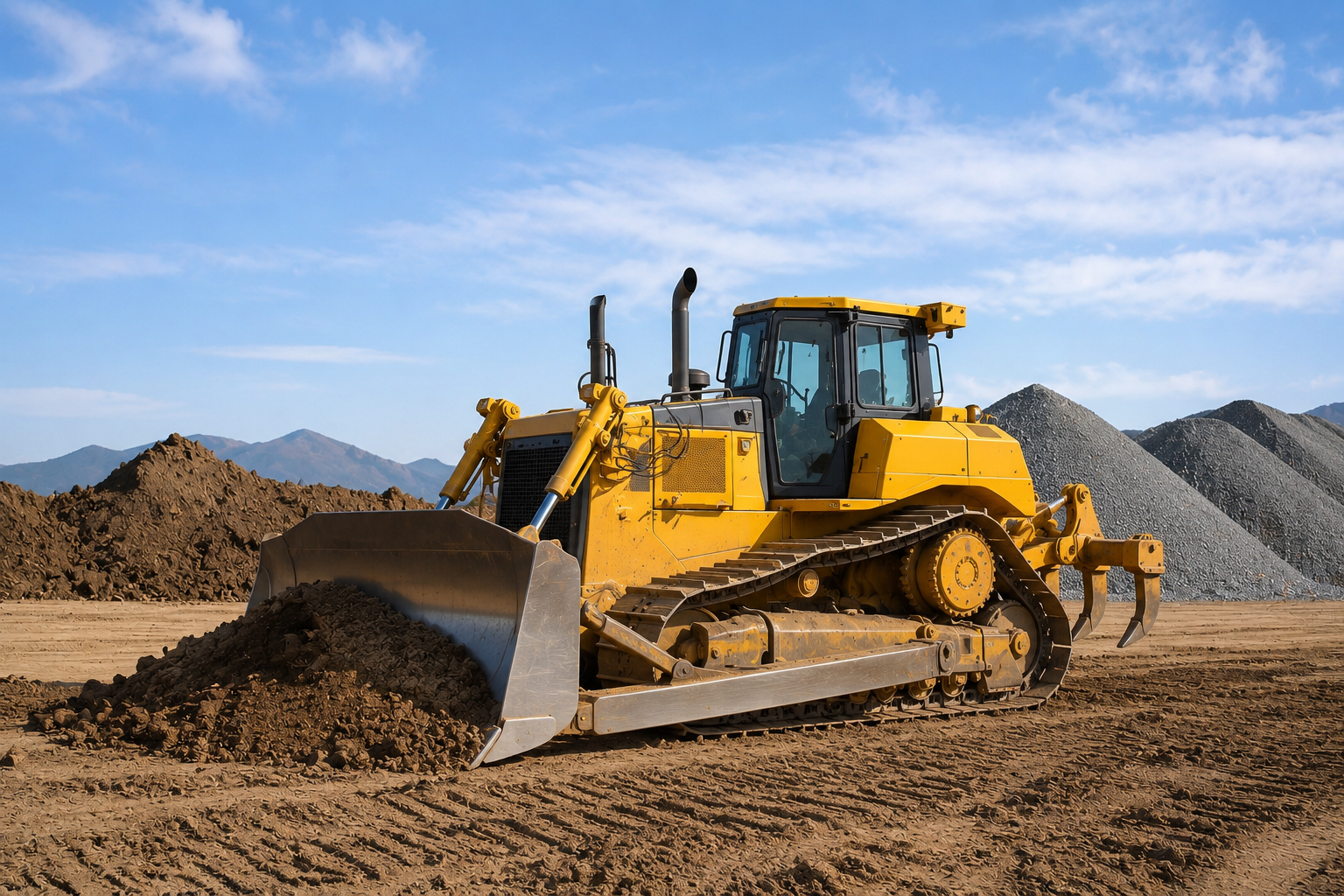
The A blade has no side wings. It adjusts to different angles. You can tilt it left. You can tilt it right. You can angle it up to 30 degrees.
- Purpose: Side casting. Ditching. Snow removal. Material pushing to one side. The A blade pushes material sideways effortlessly compared to other types of bulldozer blades.
- Advantages: A blade moves material without turning the dozer. You cut ditches in one pass. You clear snow off roads fast. You reduce turning time.
- Disadvantages: A blade does not carry material forward. Material spills sideways. You cannot push large volumes forward. The A blade is for specialized work.
- Best jobs: Road shoulder work. Ditch cutting. Snow plowing. Slope grading.
A road maintenance operator used an A blade. He cleared snow from 20 miles of highway. He angled the blade to push snow off the road. He cleared each pass without turning. His A blade saved hours of turning time. The A blade is a specialized selection among types of bulldozer blades.
The C blade has a large curved back. It has no side wings. It sits close to the dozer tracks. It pushes material forward with a rolling motion.
- Purpose: Pushing scrapers. Load assist. Stockpile work. The C blade works uniquely well with wheel scrapers compared to other types of bulldozer blades.
- Advantages: C blade pushes scrapers efficiently. The curved back holds material. The blade pushes without spilling. You load scrapers in less time.
- Disadvantages: C blade does not grade well. It does not carry material alone. It requires a scraper to work effectively.
- Best jobs: Scraper loading. Stockpile dozing. Heavy earthmoving with scrapers.
An earthmoving contractor used a C blade with his scrapers. Each scraper loaded in 90 seconds. Without the C blade, loading took 3 minutes. The C blade doubled his production. The C blade completes the primary types of bulldozer blades used in construction.
Standard tracks have medium width shoes. Each shoe is 18 to 24 inches wide. The track chain is standard size. The track rollers are standard spacing.
- Purpose: Normal ground conditions. Firm soil. Rocky terrain. General construction. Standard tracks fit most types of bulldozer jobs.
- Advantages: Standard tracks wear evenly. Parts are widely available. Cost is lower than wide tracks. They perform well on firm ground.
- Disadvantages: Standard tracks sink in soft soil. They cannot cross swamps. They damage paved surfaces.
- Best uses: Rocky sites. Construction projects. Forest clearing. Quarry work.
Standard tracks match most types of bulldozer blades for general use.
LGP tracks have wide shoes. Each shoe is 30 to 36 inches wide. The shoe width spreads the machine weight. Ground pressure drops to 5 PSI or less.
- Purpose: Soft ground. Swamps. Wetlands. Muddy conditions. LGP tracks float on weak soil where other types of bulldozer tracks fail.
- Advantages: LGP tracks prevent sinking. They protect fragile ground. They work in wet conditions. They reduce soil compaction.
- Disadvantages: LGP tracks wear faster on hard ground. They cost more to replace. They turn slower than standard tracks.
- Best uses: Swamp drainage. Wetland restoration. Pipeline work in soft soil. Rice paddy work.
XLGP tracks are even wider than LGP. Shoe width reaches 42 inches. Ground pressure drops to 3 PSI. These tracks spread weight like snowshoes.
- Purpose: Very soft ground. Deep mud. Peat bogs. Marshland. XLGP tracks work where other types of bulldozer machines stop.
- Advantages: XLGP tracks float on any surface. They cause minimal ground damage. They work in extreme conditions.
- Disadvantages: XLGP tracks wear fast on hard ground. They cannot turn on firm surfaces. They are expensive. They require special transport.
Double grouser tracks have two raised bars per shoe. The bars dig into the ground. The bars provide maximum traction.
- Purpose: Rock excavation. Quarry work. Hard packed surfaces. Steep slope work. Double grouser tracks grip any hard surface better than other types of bulldozer tracks.
- Advantages: Double grouser tracks provide superior traction. They prevent track slip. They climb steep slopes. They handle rock surfaces.
- Disadvantages: Double grouser tracks damage paved roads. They cannot travel on hard surfaces easily. They vibrate more causing operator fatigue.
Smooth tracks have no grouser bars. The shoe surface is flat. The track contacts the ground with full surface.
- Purpose: Paved surfaces. Finished concrete. Roads. Airfields. Smooth tracks protect finished surfaces unlike other types of bulldozer options.
- Advantages: Smooth tracks do not damage pavement. They run quietly. They are smooth to operate. They reduce operator fatigue.
- Disadvantages: Smooth tracks have no traction on soft ground. They slip on mud. They cannot climb slopes. They are only for hard surfaces.
Now you know the types of bulldozer blades and tracks. The right combination depends on your job.
- Job 1 (Fine grading on firm ground): Use an S blade with standard tracks. The S blade levels precisely. Standard tracks stay stable.
- Job 2 (Pushing coal in a stockpile): Use a U blade with double grouser tracks. The U blade holds coal. Double grouser tracks grip the pile.
- Job 3 (General site prep on firm ground): Use an SU blade with standard tracks. The SU blade does everything. Standard tracks work everywhere.
- Job 4 (Road side ditch cutting): Use an A blade with double grouser tracks. The A blade angles material. Double grouser tracks hold the slope.
- Job 5 (Wetland pipeline installation): Use an S blade with LGP tracks. The S blade cleans the path. LGP tracks float on soft ground.
- Job 6 (Loading scrapers on dry ground): Use a C blade with standard tracks. The C blade pushes scrapers fast. Standard tracks support the weight.
Operators make five common mistakes regarding the types of bulldozer setups. Avoid them.
| The Mistake | The Consequence | The Correct Choice |
|---|---|---|
| Using an S blade for bulk pushing | Material spills, wasting fuel and time | Use a U blade |
| Using a U blade for grading | Blocks visibility, unable to level ground | Use an S blade |
| Using standard tracks in soft ground | Machine sinks, getting stuck | Use LGP / XLGP tracks |
| Using wide tracks on hard rock | Tracks wear fast, grousers break | Use double grouser tracks |
| Using aggressive tracks on pavement | Damages the surface, costly repairs | Use smooth tracks |
One operator used standard tracks in a swamp. He sank the dozer. Recovery cost 5,000 dollars. He switched to LGP tracks. He never sank again. He learned about the different types of bulldozer tracks the hard way.
Blade Costs (Average)
- S blade: $8,000
- A blade: $9,000
- SU blade: $10,000
- C blade: $11,000
- U blade: $12,000
Track Costs (Average Set)
- Standard track: $15,000
- Smooth track: $16,000
- Double grouser: $18,000
- LGP track: $22,000
- XLGP track: $30,000
A wrong choice among these types of bulldozer combinations doubles your cost, wastes your time, and damages your machine. Choose wisely.
You now know the 5 types of bulldozer blades. You now know the 5 types of bulldozer tracks. You know which blade fits your job and which track fits your ground.
What is your work site? What is your ground condition? What is your material? Answer these questions. Choose the right types of bulldozer setups. Save money. Save time. Finish work fast.
Share your experience in the comments. What blade do you use? What tracks do you use? What job do you do? Your story helps other operators.
Looking for compact power that handles attachments beautifully? Check out this reliable skid steer.
View TYPHON Stomp V1000 Diesel Skid Steer →Heavy equipment insights and operations powered by TyphonMachinery.com