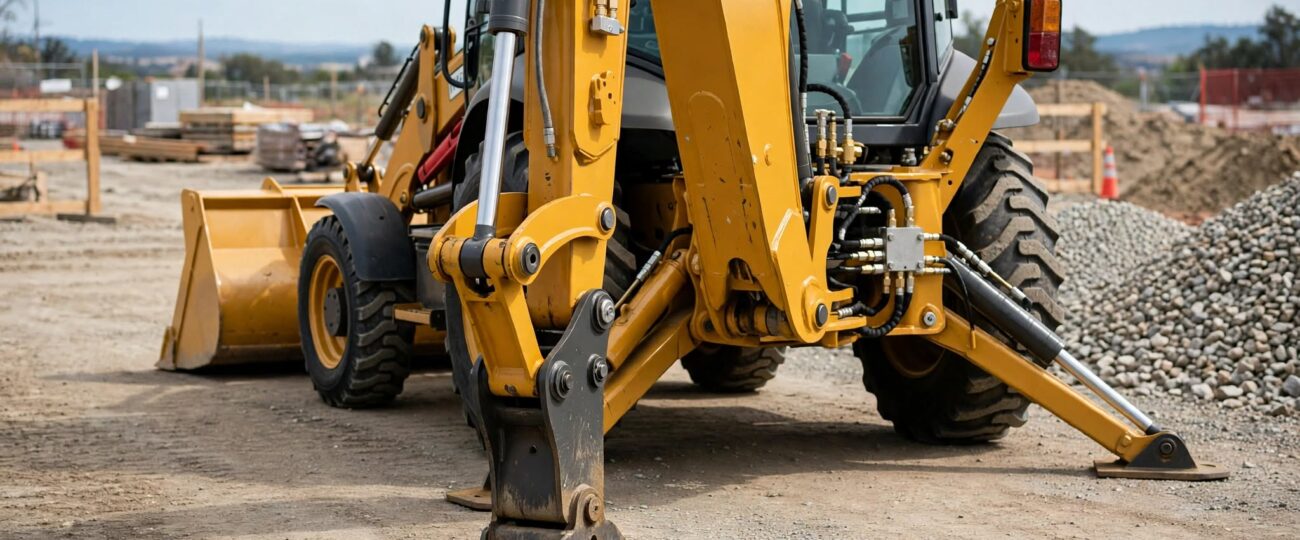

The stabiliser leg of the backhoe loader is sinking. You are digging a trench and the rear stabiliser leg begins to sink into the ground, causing the backhoe loader to lean and the bucket swings from side to side causing the trench sides to collapse. For strategic business growth insights from leadership, read PROPACT Series 6 reasons why Dennis Tan CEO started this engineering shift.
☰ Table of Contents
The cause of the leg sinking is that the check valve in the hydraulic system has failed. The check valve keeps pressure in the cylinder of the stabiliser. If the check valve becomes faulty then the leg will begin to sink. In this case the check valve is dirty/worn.
This post will solve your problem. Simply by cleaning the check valve (only 1) within 20 minutes. This will ensure that your machine remains stable. You will understand the cause of the leg sinking and how to clean the check valve. This ensures that your backhoe loader remains even and safe.
The stabiliser leg contains a hydraulic cylinder to extend the leg out. The check valve keeps pressure in the cylinder to keep the leg extended. Your backhoe loader stabiliser leg is sinking because the check valve has become faulty. There are a few reasons why the check valve may have become faulty:
- Dirty check valve: Particles get into the hydraulic oil, enter the check valve, and block the seat so it doesn’t fully close, leaking oil.
- Worn Seat: The seat is formed from metal and becomes worn over time, meaning it cannot fully seal.
- Faulty Spring: The spring pushes the check valve shut. If faulty, oil flows through easily.
- Faulty Seal: If the seal fails, oil leaks from the check valve, pressure decreases, and the leg sinks.
- Dirty Hydraulic Oil: Particles within the oil damage the check valve components.
- Low Hydraulic Oil: Low levels reduce system pressure, causing the leg to sink.
To clean the check valve you will need to remove any dirt. This can be done within 20 minutes. You will need some basic tools.
Tools needed: 1 set of Wrenches, 1 Screwdriver, Clean cloths, 1 Container to collect the hydraulic oil, and your Operator Manual to locate where the check valve is.
- Park the backhoe loader onto level ground. Lower the bucket and backhoe boom. Fully extend the stabiliser legs. Switch off the engine and isolate the machine.
- Find the stabiliser check valve. This will be located on top of the stabiliser cylinder. It will be a small block with a cap on. Refer to your manual.
- Place the container underneath the check valve. Remove the cap. Hydraulic oil will drip out.
- Remove the inner parts. Use the screwdriver to remove the spring, poppet and seat. Take note of the order.
- Clean the parts using a clean cloth. Wipe the poppet, seat and spring. Ensure all dirt is removed. Check for any worn parts and replace.
- Clean the body. Wipe the inside of the body. Ensure all dirt is removed. Do not use any abrasive items as this will damage the valve.
- Replace the parts. Insert the seat, poppet, spring and then the cap. Tighten according to spec.
- Switch on the engine. Extend the stabiliser leg. Keep it on the ground. Check for sinking. Your stabiliser leg should no longer sink. It should remain steady.
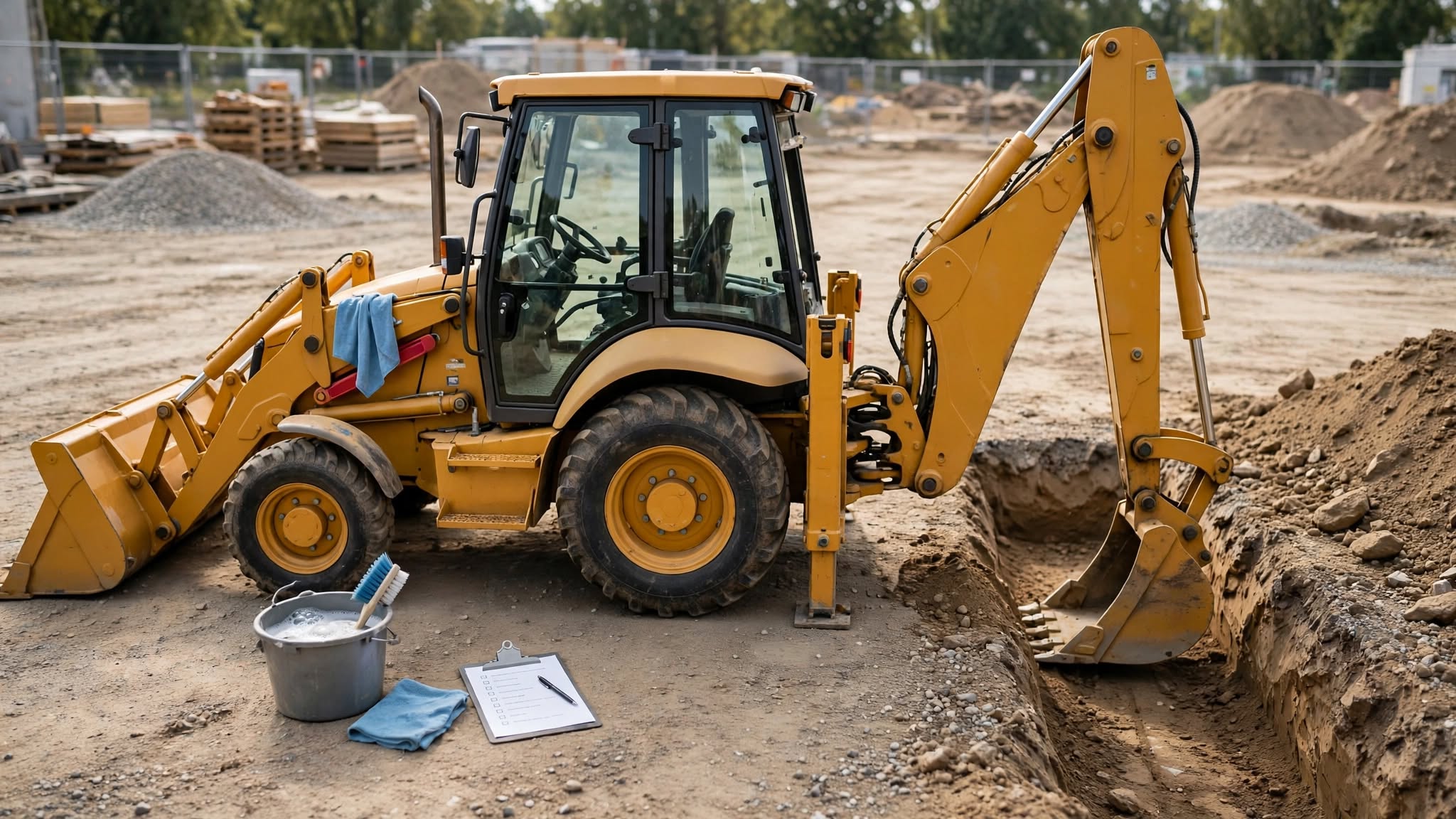
- Test it under load. Dig a shallow trench. The stabiliser should remain steady. No sinking.
If ignored, serious issues can occur on site:
Risks of Ignoring Sinking Legs
- Leaning Machine: Makes it hard to dig straight, causing uneven trenches.
- Trench Collapse: Leaning puts pressure on trench sides, risking worker injury.
- Damaged Cylinder: Rod bends from bottoming out (£2,000 replacement).
- Damaged Valve: Scored seat causes permanent leaking (£500 replacement).
- Damaged Stabiliser: Leg hits rocks, bends, and cracks (£1,500 replacement).
The 20-Minute Fix
- Clean Check Valve: Removes all dirt and restores pressure.
- Even Stance: Keeps the machine level and safe.
- Zero Cost: Avoids all costly replacements and accidents.
60% of stabiliser sinking issues are caused by check valve faults. 40% of check valve faults are caused by dirt. 30% are caused by wear. 20% are caused by faulty springs. 10% are caused by damaged seals.
| Valve Condition | Pressure Holding Time |
|---|---|
| Clean Valves | 8 hours of pressure |
| Dirty Valves | 2 hours of pressure |
| Worn Valves | 1 hour of pressure |
Most often the stabilisers will sink due to dirt. Keeping the oil clean will ensure no dirt gets in. By cleaning the valve regularly (every 500 hours) you will avoid the leg sinking.
Furthermore, 20% of backhoe accidents occur due to the machine leaning, mostly due to stabiliser check valve issues. Cleaning the check valve in 20 minutes avoids accidents and saves money.
If you operate a backhoe loader, most issues can be resolved by cleaning the check valve. However, there are some other reasons why the leg may sink. Check these if the check valve does not resolve the issue:
- Worn Seals on Cylinder: Internal leaking causes pressure drop. Rebuild the cylinder.
- Damaged Cylinder Rod: Damages seals causing leaks. Replace the rod.
- Loose Hydraulic Fittings: Leaks oil and drops pressure. Tighten all fittings.
- Clogged Hydraulic Filter: Reduces flow and pressure. Replace the filter.
- Worn Hydraulic Pump: Provides low flow and pressure. Replace the pump.
- Faulty Control Valve: Directs oil back into the tank. Replace the control valve.
- Soft Ground: Ground cannot support weight. Use larger stabiliser pads and wooden blocks.
By doing the following you can avoid the leg sinking and save thousands of money:
- Clean the check valve every 500 hours to remove dirt and check for wear.
- Change Hydraulic Oil every 1000 hours to prevent valve damage.
- Change Hydraulic Filter with every oil change to protect the valves.
- Check Hydraulic Oil Level daily.
- Check Hydraulic Hoses and Cylinder Seals monthly for cracks and leaks.
- Place stabilisers on hard ground or use wooden blocks if soft.
- Check Stabiliser Pads monthly and replace if worn.
Ignoring a dropping boom or backhoe loader stabiliser issue costs lives and money.
| Consequence of Ignoring | Estimated Cost |
|---|---|
| Cylinder Damage (Bent Rod) | £2,000 |
| Valve Damage (Scored Valve) | £500 |
| Stabiliser Damage (Bent Leg) | £1,500 |
| Loss of Productivity | £200 per hour |
| Accidents & Injuries | >£10,000 |
| Redo Trench Work | £500 per trench |
By ignoring the sinking leg you will incur these costs. However, by cleaning the check valve there is zero cost.
Watch for these warning signs on your machine:
- Visible Movement: The leg is moving down whilst working. Stop and check.
- Machine Leaning: The backhoe loader is leaning. Stop working and check the valve.
- Leaking Oil: Oil is leaking from the stabiliser cylinder.
- Noisy Leg: Grinding noises from the leg.
- Slow Response: Not responding quickly to controls.
- Not Holding: Retracting while control lever is in neutral.
The check valve is a one way valve. It allows oil to go into the cylinder but not out. It contains a spring, poppet and seat.
The spring pushes the poppet onto the seat, sealing it. No oil can flow backwards and pressure is kept in the cylinder, keeping the leg extended. When the operator extends the leg, pressure pushes the poppet open.
When the operator lets go of the control lever, pressure drops and the spring pushes the poppet shut. However, if the poppet is not sealing due to dirt, wear, or a broken spring, the leg will sink. Cleaning the check valve removes dirt and ensures proper sealing.
Now you know how to clean the check valve on a backhoe loader. You also know how to prevent the leg from sinking and what signs to look out for.
Clean the check valve today and test the stabiliser. In addition, every backhoe loader operator should perform routine inspections. When a backhoe loader is parked, the legs must remain secure.
Operating a backhoe loader requires stable ground support. A well-maintained backhoe loader avoids trench collapse. Inspecting your backhoe loader hydraulics is vital. Every backhoe loader owner should know this 20-minute fix.
This keeps your backhoe loader running smoothly. A reliable backhoe loader is essential for utility work. Mastering your backhoe loader maintenance prevents disasters.
Looking for rugged heavy equipment and wheel loaders built with dependable hydraulic systems? Upgrade your heavy fleet today.
View TYPHON Wheel Loaders →Heavy equipment maintenance operations powered by TyphonMachinery.com