
Best Mini Skid Steer Attachments — Complete Guide
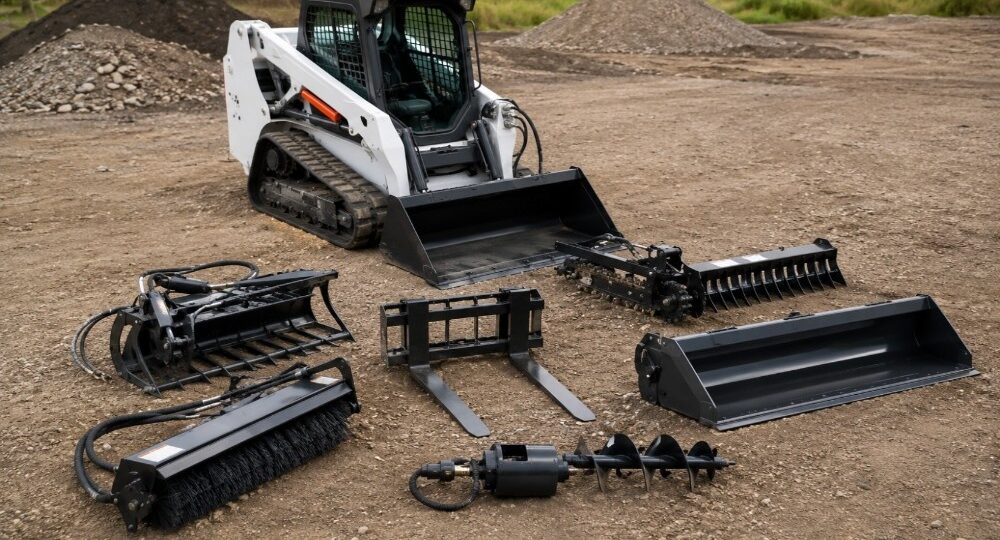
A mini skid steer by itself is useful. A mini skid steer with attachments is a whole different machine. One base unit. Dozens of jobs. Swap tools in under a minute.
Here are the best mini skid steer attachments for your operation — and how to choose the right ones from day one.
This is the first attachment you buy. A bucket turns your mini skid steer into a loader. Scoop dirt. Move gravel. Load debris. Spread topsoil.
Bucket sizes range from 36 to 48 inches wide. A wider bucket moves more material per load. A narrower bucket digs deeper and breaks packed soil. Most owners buy a 42-inch bucket as a starting point.
Your mini skid steer bucket handles loose material well. Do not use it for rock breaking or prying. Bucket edges bend under side load. Keep a spare cutting edge on your shelf.
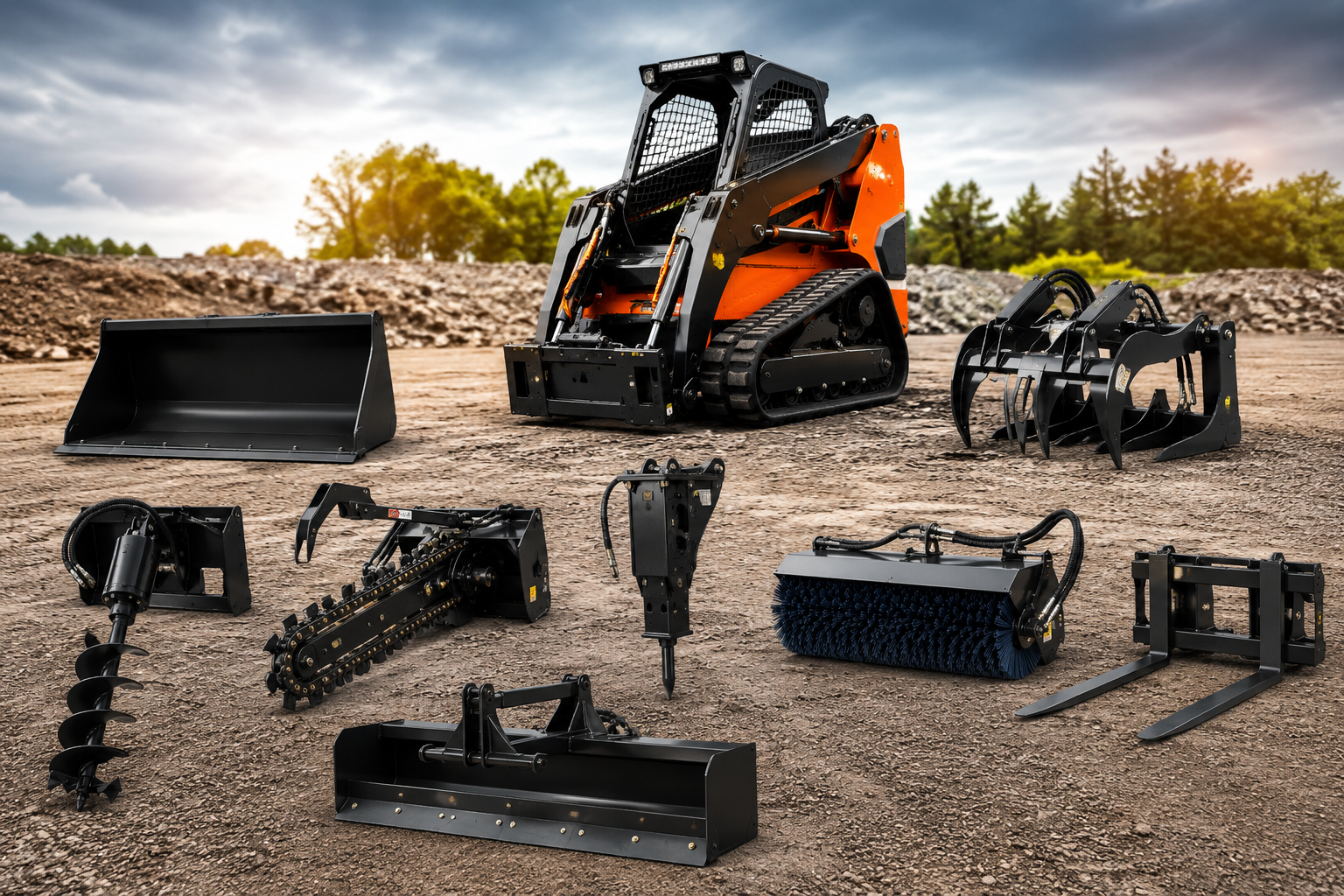
Digging holes by hand takes time. An auger on your mini skid steer changes that. Drill post holes in 60 seconds. Drill tree planting holes in 45 seconds. Drill footing holes for decks and sheds.
Auger bits come in sizes from 6 to 18 inches. A 6-inch bit works for fence posts and small trees. A 10-inch bit works for 4×4 posts and shrubs. A 14-inch bit works for deck footings and large trees.
Your mini skid steer needs a flow rate of 10 to 15 gallons per minute to run an auger. Most machines meet this spec. Check your manual before buying.
Picking up brush by hand hurts your back. A grapple on your mini skid steer solves this. Open the jaws. Drive over a pile. Close the jaws. Lift and move.
Use a grapple for tree limbs, logs, demolition debris, and rocks. The grapple holds material in place while you drive. No spills. No second trip.
A light-duty grapple works for brush and branches. A heavy-duty grapple works for concrete and rocks. Match the grapple to your material. Your mini skid steer has a lift limit of 800 pounds. Do not exceed it.
Trenching by shovel takes hours. A trencher on your mini skid steer cuts through soil in minutes. Install irrigation lines. Lay drainage pipes. Run electrical conduit. Bury low-voltage wire.
Trencher depths range from 24 to 48 inches. Widths range from 4 to 12 inches. A 6-inch wide trench at 24 inches deep handles most residential work.
Your mini skid steer drives the trencher through loose soil and clay. Stop for large rocks. Stop for tree roots. The chain digs best in consistent ground.
Concrete removal with a sledgehammer wears you out. A breaker on your mini skid steer breaks slabs fast. Remove a small patio. Break a driveway apron. Demo a basement floor.
Breaker attachments use hydraulic power. Your mini skid steer provides the flow. The breaker hammers at 1,000 blows per minute. A 500-pound breaker works well on a mini skid steer.
Use the breaker for concrete up to 6 inches thick. Thicker slabs need a larger machine. Your mini skid steer will bounce on thick reinforced concrete. Know your limits.
Cleaning a parking lot with a broom takes forever. A sweeper on your mini skid steer clears debris in minutes. Remove dirt and dust from pavement. Clean up after a concrete pour. Clear a job site at the end of the day.
Sweeper brushes come in polypropylene or steel. Polypropylene works for dirt and snow. Steel works for heavy debris and packed material. Most contractors use polypropylene for daily cleanup.
Your mini skid steer drives the sweeper at full engine RPM. The brush spins at high speed. Dust flies up. Wear a mask or use a water mister.
Watch: Full Mini Skid Steer Attachment Comparison Test
Watch Full Comparison on YouTubeLifting pallets by hand requires two people. Pallet forks on your mini skid steer do the job solo. Move bags of concrete. Transport blocks and pavers. Reload feed bags on a farm.
Forks come in 36 and 42-inch lengths. A 36-inch fork handles standard pallets. A 42-inch fork handles oversized loads. Your mini skid steer lifts 800 pounds. Do not overload.
Slide the forks under a pallet. Tilt back to secure the load. Drive slowly. The machine gets tippy with a raised load.
Grading soil with a rake takes practice. A land leveler on your mini skid steer creates a smooth finish. Prepare a yard for sod. Level a gravel driveway. Finish a patio base.
The leveler uses a flat bar and a rear roller. Your mini skid steer pushes the leveler across the soil. High spots get cut down. Low spots get filled. One pass flattens the surface.
A 48-inch leveler works well on a mini skid steer. Wider levelers cause the machine to tip on uneven ground. Take shallow cuts. Make multiple passes.
Start with a bucket. You need to move material on every job. A bucket handles dirt, gravel, mulch, and debris.
Buy an auger second. Hand digging holes is slow. Your customers pay for fence and tree work. An auger makes those jobs profitable.
Get a grapple third. Picking up brush and rocks by hand wears out your crew. A grapple eliminates hand lifting. Your body lasts longer.
Own These Attachments
- Bucket — used on every job
- Auger — fence, tree, deck work
- Grapple — cleanup and brush removal
- Pallet Forks — material delivery days
Rent These Attachments
- Trencher — irrigation and drainage jobs
- Breaker — demolition jobs only
- Sweeper — occasional site cleanup
Simple rule: Rent any attachment you use fewer than 10 days per year. Own the attachments you use weekly. This keeps your capital free and your equipment list lean.
Your mini skid steer attachments need care. Neglect costs you money.
- Grease before use. Augers have gearboxes. Grapples have pivot pins. Breakers have tool bushings. Pump grease until old grease pushes out.
- Sharpen cutting edges on buckets and levelers. A dull edge pushes material instead of cutting. Use an angle grinder. Five minutes of sharpening saves 30 minutes of work.
- Check hydraulic hoses for wear. Rub marks become leaks. Replace any hose with exposed fabric. A $40 hose saves a $400 repair bill.
- Store attachments off the ground. Moisture rusts pins and bushings. Pallet racks work well. Concrete blocks work too. Keep them dry.
Related: Compact vs Full-Size Construction Equipment — Which is Right for You?
Read the Full ComparisonI asked 10 mini skid steer owners about their most used attachments. Here is their list.
| Attachment | Primary Use | Frequency |
|---|---|---|
| Bucket | Moving material — dirt, gravel, debris | Every job |
| Auger | Fence, tree, and deck work | Several times a week |
| Grapple | Cleanup and tree work | Several times a week |
| Pallet Forks | Material delivery and unloading | Material delivery days |
| Sweeper | Site cleanup at end of day | End of every job |
The attachment plate on your mini skid steer uses a universal standard. You can buy attachments from any brand — Toro, Vermeer, Ditch Witch, Bobcat. They all fit your machine.
Do not buy cheap attachments. Low-quality steel bends. Weak welds crack. Poor hydraulic fittings leak. Spend a little more. Buy from a known brand.
Look at your most common jobs. Write down the three tasks that take the most time. Match those tasks to the right attachments.
- Digging holes takes time — buy an auger.
- Moving dirt takes time — buy a bucket.
- Picking up debris takes time — buy a grapple.
Start with three attachments. Use them for six months. Add more as jobs require. Your mini skid steer works harder with each new tool added to your lineup.
A mini skid steer without attachments is half a machine. Add the right attachments. Turn your machine into a full crew.
Looking for a compact machine that runs all these attachments without breaking a sweat? The TYPHON STOMP V1000 is a proven 1.5-ton skid steer built on a Kubota engine — ready for every attachment on this list from day one.
See How It Compares to Full-Size Machines →

[…] TYPHON Machinery Is TrustedCat to deploy Autonomous Hauling Solution at Carmeuse’s Michigan quarryBest 9 Mini Skid Steer Attachments for YouVinci buys Ion, targets regenerationKent picks Ringway for £50m highways […]