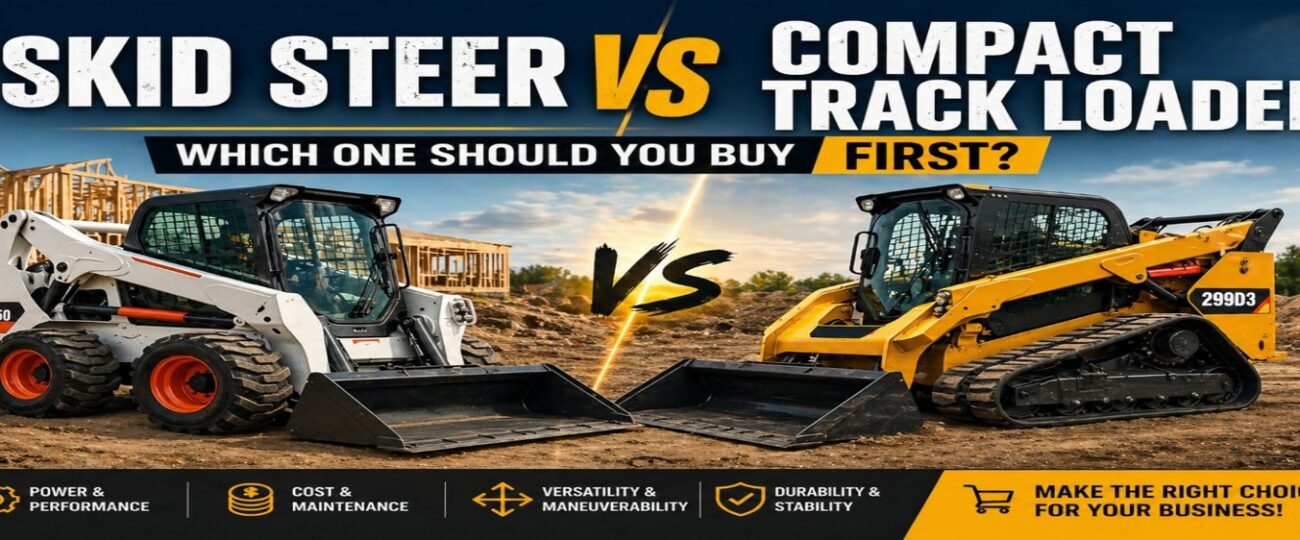

Skid Steer vs Compact Track Loader
Skid Steer vs Compact Track Loader is a common comparison for contractors choosing the right machine for performance, terrain, and budget.This is one of the most common questions buyers ask. Someone’s ready to buy their first compact machine, they’ve got it down to these two, and they just want a straight reply. The problem is, most articles beat around the bush and say, “it depends.” And yeah, it does depend — but on specific things you already know about your own work. This post talks about those things so you actually walk away with a real answer for your situation.
1. What You’re Choosing Between
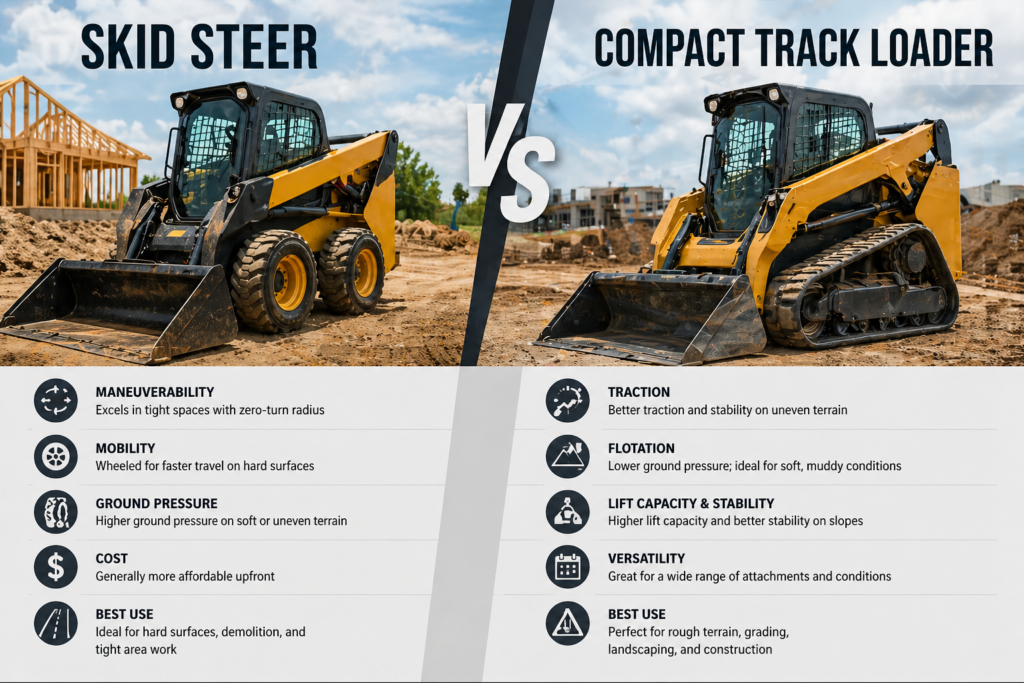
A skid steer loader has four wheels. It turns by running up or slowing down the wheels on each side, which drives the machine to spin in a tight circle.
A compact track loader does the same kind of work but runs on rubber tracks instead of wheels. The tracks spread the machine’s weight over a bigger area. That completely changes how it handles soft, wet, or uneven ground.
Same cab. Same attachment system. Same basic controls. The only real difference is where and how you use the machine.
2. Ground Conditions Come First
Before anything else, think about where 80% of your work happens.
If you work on dry, hard-packed ground most of the year, a skid steer will handle your jobs just fine. Paved surfaces, dry construction sites, warehouses, parking lots, and farmyards — all good for wheeled machines. The skid steer moves faster on hard ground, turns tighter, and costs less to buy and maintain.
But if your job sites are usually wet, get soft after rain, or have a lot of loose soil, sand, or mud — a track loader will keep you working when a skid steer would get stuck or tear up the ground. Rubber tracks float over conditions that swallow wheels. That’s not an exaggeration. A loaded skid steer on wet clay will sink and lose traction fast. The same job with a track loader? It keeps moving.Many buyers research Skid Steer vs Compact Track Loader to understand which equipment works best for their daily jobsite needs.
Ask yourself this: Over the last 12 months, how many days did ground conditions mess up your equipment or your schedule? If the answer is “rarely,” a skid steer is fine. If it’s “often,” a track loader will save you headaches.
3. Purchase Price Difference
This matters when you’re buying your first machine and cash flow is tight.
A new mid-range skid steer runs between $40,000 and $55,000, depending on how it’s made. A similar compact track loader from the same brands runs $55,000 to $75,000.
Used equipment narrows the gap a little but doesn’t erase it. A three-year-old skid steer with 1,500 hours sells for $25,000 to $35,000. A similar track loader sells for $35,000 to $50,000, depending a lot on track condition.
If the higher price of a track loader stretches your budget too much in year one, a skid steer can get you working and making money sooner. A machine you own and run today beats a machine you’re still saving up for.
4. Operating Costs Over Time
The purchase price is one conversation. Operating costs over three to five years are different one.
Skid steer tires on a machine operating rough terrain need to be alternated every 600 to 1,200 hours, depending on surface conditions and tire type. A full set of four skid steer tires costs $800 to $2,000, depending on label and size. On an abrasive or rocky site, you replace them more often. Skid Steer vs Compact Track Loader
Track replacement on a compact track loader costs significantly more per service. A full set of rubber tracks runs $3,000 to $6,000 depending on machine size and track specification. Tracks last 1,200 to 1,800 hours under normal conditions. On rocky ground or hard abrasive surfaces, track life drops and cost per hour rises.
This is the part most buyers miss. The track loader costs more to buy and more to maintain per service interval. On the right terrain, that cost is worth spending because productivity stays high and ground damage stays low. On the wrong terrain, you pay track prices without getting track benefits.
5. Speed and Maneuverability
Travel speed is not a spec most buyers pay attention to. It should be.
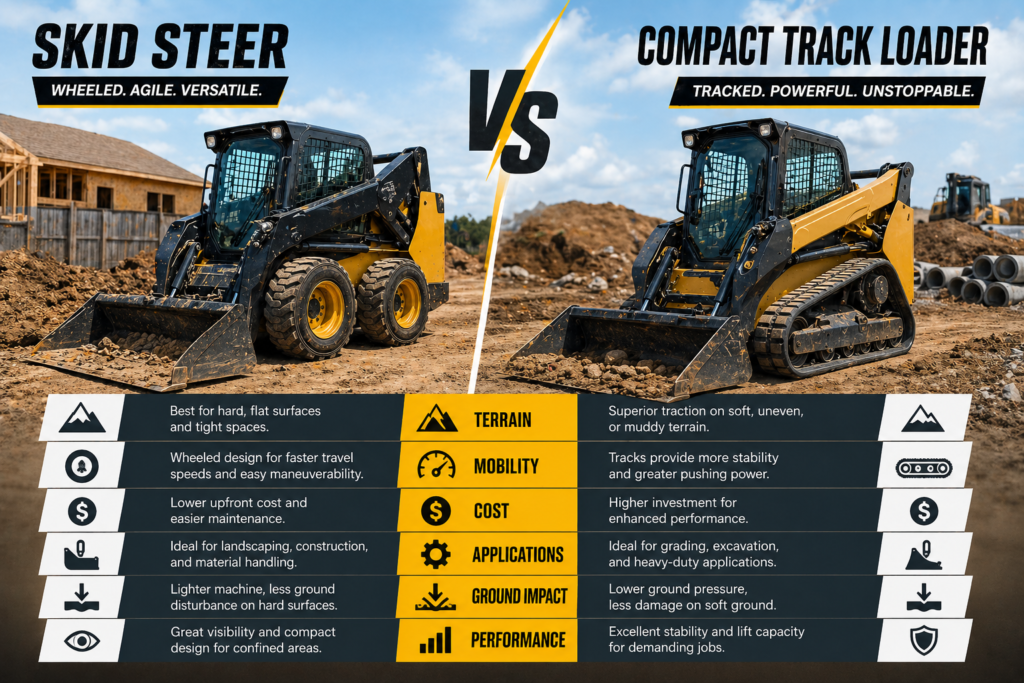
A skid steer travels at 7 to 12 mph depending on the model. A compact track loader travels at 6 to 9 mph. On a large site where you cover distance regularly between loading and dumping points, that speed difference adds up across an 8-hour shift.
Inside a structure or confined area, speed matters less. Maneuverability in tight corners matters more. Both machines function similarly in confined spaces, but the skid steer turns little tighter on smooth floors because the wheels grip and pivot cleanly. Tracks on a hard smooth floor skid less predictably.
6. Attachment Compatibility
Both machines use the same universal quick coupler system. Every attachment you buy for a skid steer fits a compact track loader of the same frame size from the same manufacturer. Buckets, augers, grapples, pallet forks, sweepers, cold planers, trenchers. The attachment investment transfers fully if you ever switch between machine types.
This means your attachment buying decision is separate from your machine buying decision. Buy the attachments your work requires. They work on either platform.
7. Which Work Type Points to Each Machine
Buy a skid steer first if your work covers these areas regularly.
You work on paved surfaces, compacted gravel yards, or dry construction sites most of the year. You need material handling speed and your sites have room to move. Your work involves concrete or asphalt where track damage creates a liability. Your budget is tighter and a lower purchase price improves your cash position in year one. You operate in dry climates where wet ground is a rare event.When comparing Skid Steer vs Compact Track Loader, factors like traction, maintenance, speed, and operating cost matter most.
Buy a compact track loader first if your situation looks like this instead.
Your sites get wet and stay soft for weeks at a time. You work on slopes where wheeled traction becomes unreliable. Your projects involve landscaping, earthworks, or site preparation on natural ground. Ground protection matters on your jobs because clients or specifications require it. You work in regions with significant rainfall or near water where ground conditions shift regularly.
8. One More Thing to Consider
Talk to the contractors working similar jobs in your area. Not the ones selling equipment. The ones operating it every day on sites like yours.
Ask them what they wish they had bought first. Ask them what ground conditions cost them the most downtime. Ask them what their track or tire replacement costs look like annually. Skid Steer vs Compact Track Loader
The people doing your type of work in your climate on your soil types have already figured out which machine fits. Their experience costs you nothing and saves you from making a $50,000 decision based on spec sheets alone.In the end, Skid Steer vs Compact Track Loader comes down to choosing the machine that fits your work best.
Skid Steer vs Compact Track Loader

[…] Trending Typhon Terror X2 Max 2.5 Ton Excavator | 24.4HP Yanmar Engine Review | TYPHON MachineryKomatsu CONEXPO 2026 – Main stage presentationWorld’s first electric articulated haulers in serial production – Volvo CE.Top 7 Compact Construction Machines Every Contractor Should Know 2026Skid Steer vs Compact Track Loader: Which One Should You Buy First? […]