
Why Compact Excavators Are Replacing Manual Labor on Residential Jobs
You show up to a residential job. The homeowner expects a trench. They expect a footing. They expect a finished yard. They do not expect three men with shovels. Things have changed. Homeowners watch videos online. They see machines work. They want that speed on their property.
Compact excavators are why manual labor is losing ground — and if you are serious about growing your contracting business, read our full guide on why Typhon Machinery is the number one choice for compact equipment buyers in 2026.
A crew of two digs a 50-foot trench by hand. The soil is average. No big rocks. No tree roots. The crew finishes in 6 hours. Their backs hurt. Their hands blister.
A compact excavators digs the same trench in 45 minutes. One operator. One machine. No blisters. No sore backs. The machine works 8 times faster than hand labor. That is not an opinion. That is clock time.
You bid a job. You estimate 2 days for hand digging. You pay two laborers for 16 hours each — 32 labor hours total. You add worker insurance. You add payroll taxes. Your customer pays for all of it.
A compact excavators finishes the same job in 4 hours. One operator. 4 labor hours. Your customer pays less. You keep more profit. The homeowner does not care how you dig. They care about the final price. The machine bid wins every time.
Residential jobs have tight spaces. A side gate measures 36 inches. A backyard has a small patio. A corner has a flower bed you cannot damage. A full-size excavator does not fit.
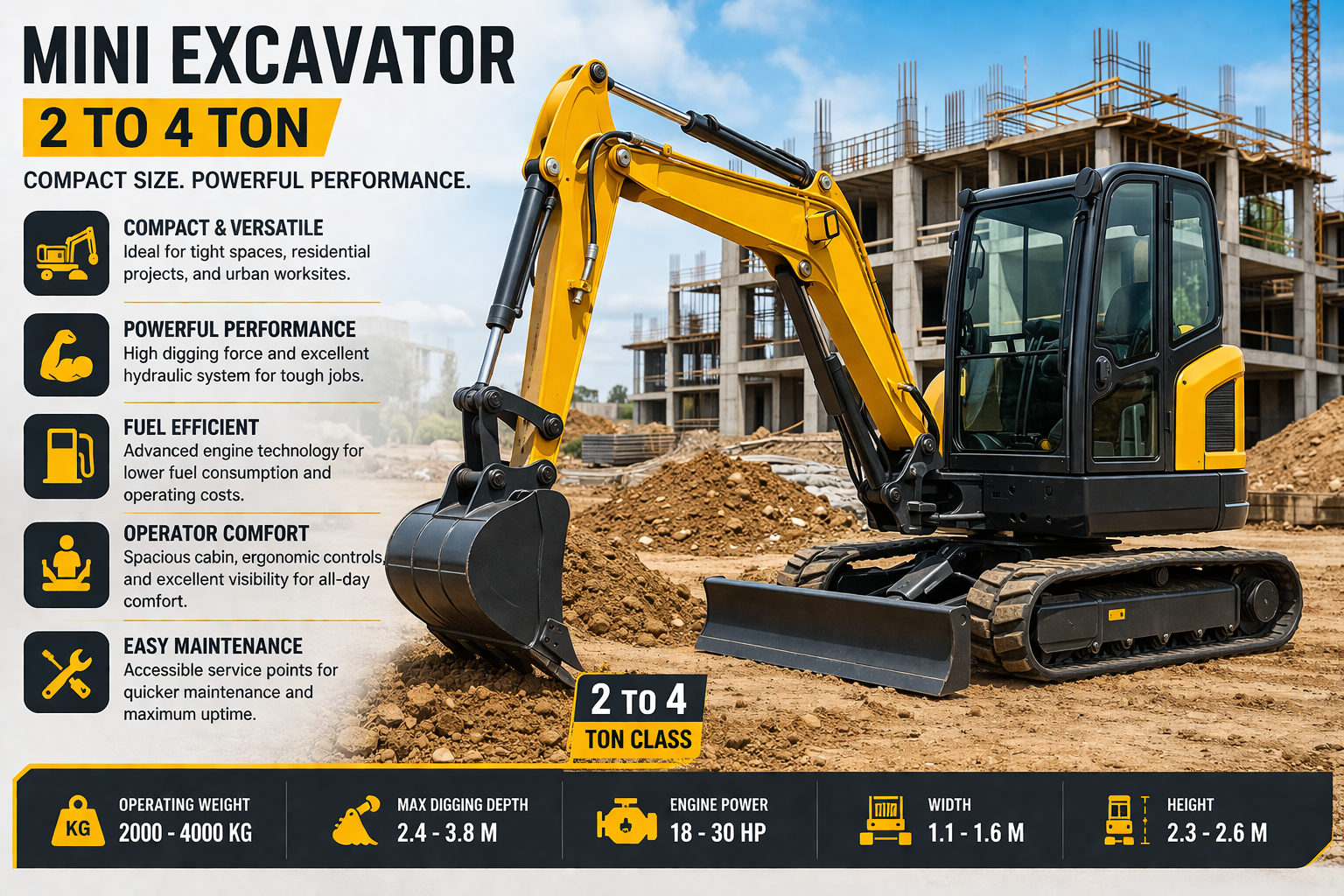
Compact excavators do. These machines measure 3 to 4 feet wide. They fit through any standard gate. They turn in their own length. They work around trees and shrubs without damage. Hand labor used to win these jobs because machines could not fit. Now they fit. Hand labor lost its only advantage.
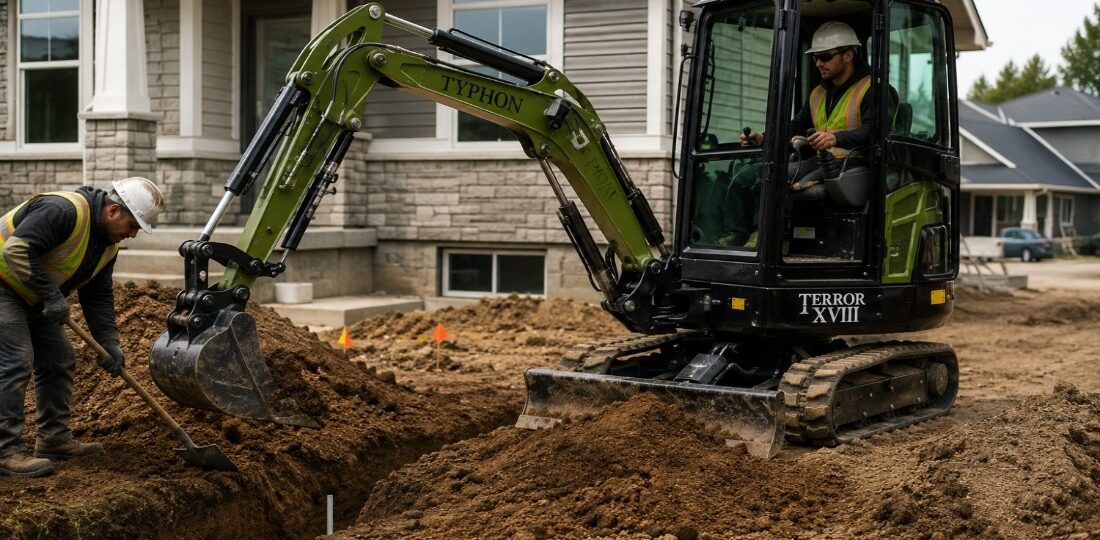
You need one person to run a compact excavators. Not two. Not three. One. That one person digs the trench. That one person loads the soil. That one person backfills at the end.
Hand labor needs multiple people. One digs. One hauls soil. One rests. The crew moves at the speed of the slowest person. The machine moves at the speed of the controls. No slowdowns. No rest breaks. No talking.
Homeowners worry about their yard. They spent money on sod. They spent weekends on landscaping. They do not want ruts. Hand walking compresses soil. Foot traffic leaves tracks. Wheelbarrows dig grooves.
Compact excavators with rubber tracks spread weight across a large area. Ground pressure measures 3 to 5 pounds per square inch. A person walking measures 8 to 10 pounds per square inch. The machine presses less than a human foot. Your customer sees no damage. Your customer calls you back.
Key fact: A compact excavators on rubber tracks puts less ground pressure on a lawn than a person walking. You leave the yard cleaner than hand labor does.
Every job type shows the same result. The machine wins:
| Job Type | Hand Labor (2 men) | compact excavators |
|---|---|---|
| Footings for a deck | 1 day | 2 hours |
| Drainage lines across a yard | 2 days | 3 hours |
| Water line to detached garage | 1 day | 90 minutes |
| Tree removal (large root ball) | 4 hours | 30 minutes |
| French drain along fence line | 1 day | 2 hours |
Young workers do not want to dig. They want to run the equipment. They want to learn a skill. They want to sit in a seat with air conditioning. You cannot find laborers who last more than one season. They quit. They move to other work. They ghost you on a Monday morning.
The machine does not quit. It does not ghost you. It shows up every day. It works every hour. You keep one good operator. You keep the machine. You let the unreliable laborers go.
A landscaper in North Carolina used hand crews for 10 years. He hired young guys. They lasted 3 months. He spent his weekends training new people. He bought a compact excavators. He runs it himself. His production doubled. His stress dropped to zero.
A fence contractor in Texas dug post holes by hand for 8 years. His crew complained every day. He bought a compact excavators with an auger. His crew now sets posts while the machine drills. He finishes 3 fences per week instead of 2.
A pool installer in Florida used hand digging for rough shape. His crew took 4 days. He bought a compact excavators. His crew now finishes rough shape in 1 day. He bids more jobs. He works more months.
You do not need to buy right away. Rent one for specific jobs and see the numbers yourself:
- Deck footing: $300 to rent vs $400 in hand labor. Machine saves you $100 on one job.
- Drainage line: $350 to rent vs $600 in hand labor. Machine saves you $250.
- Post holes (fence job): Half-day rental vs full day of crew labor.
Rent for the jobs that need speed. Own for the jobs that never stop.
Buy a compact excavators if you dig more than 50 days per year. At 50 days, the machine pays for itself quickly. At 100 days, the machine prints a profit.
Buy one if you work alone. One operator replaces two or three laborers. You control the schedule. You keep the revenue. Buy one if you want to grow. Hand labor scales poorly — you add people, you add problems. A machine scales easily. You add attachments. You add jobs.
Quick test: Look at your last 10 residential jobs. Count the labor hours paid for hand digging. Now price a compact excavators rental for one week. The difference will surprise you.
Sticking With Hand Labor Costs You
- Time. 8x slower on every single job.
- Money. 32 labor hours vs 4 machine hours.
- Workers. They quit every season.
- Jobs. You lose bids to faster competitors.
Owning a compact excavators Gives You
- Speed. Finish in hours, not days.
- Profit. One operator, maximum output.
- Access. Fits any residential gate.
- Growth. Bid more jobs, win more work.
🔗 Watch: compact excavators vs Hand Labor — Full Comparison
Watch Full Comparison on YouTubeHand labor had its time. That time passed. Compact excavators work faster, cost less, and damage less. They attract better workers and win more bids. Rent one. Try one. Buy one. The shovel is not the answer anymore.
Why Typhon Is #1 — Read Full Guide →